Solo Female French Riviera: the useful version
The question is not whether a woman can travel the Riviera alone. Of course she can. The useful question is how to make the trip feel easy: where to stay, how to get home after dinner, which trains simplify the coast and what is actually enjoyable on your own.
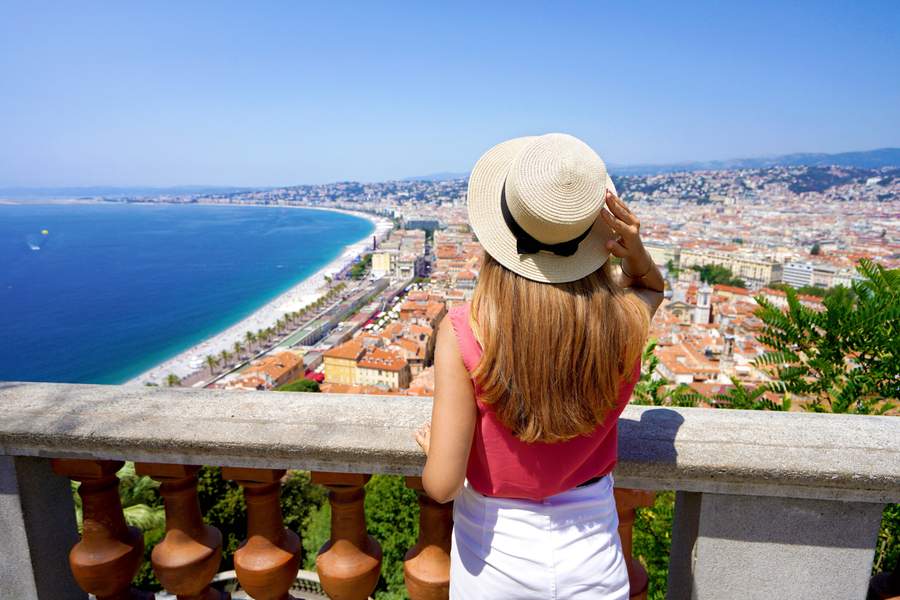
For a first solo Riviera trip, use Nice as the base and travel out by train. You get the easiest arrival, the broadest choice of hotels and dinners, and the simplest escape hatch when a day runs late.
Nice is the easiest first base if you are travelling solo without a car. The thing to check before booking is not “is Old Nice charming?” but whether your room has a lift, the station walk feels fine after dark and you can get back without negotiating a hill with luggage.
Three easy hotel choices
Affiliate links: Mametas may earn a commission at no extra cost to you. Selection stays editorial.
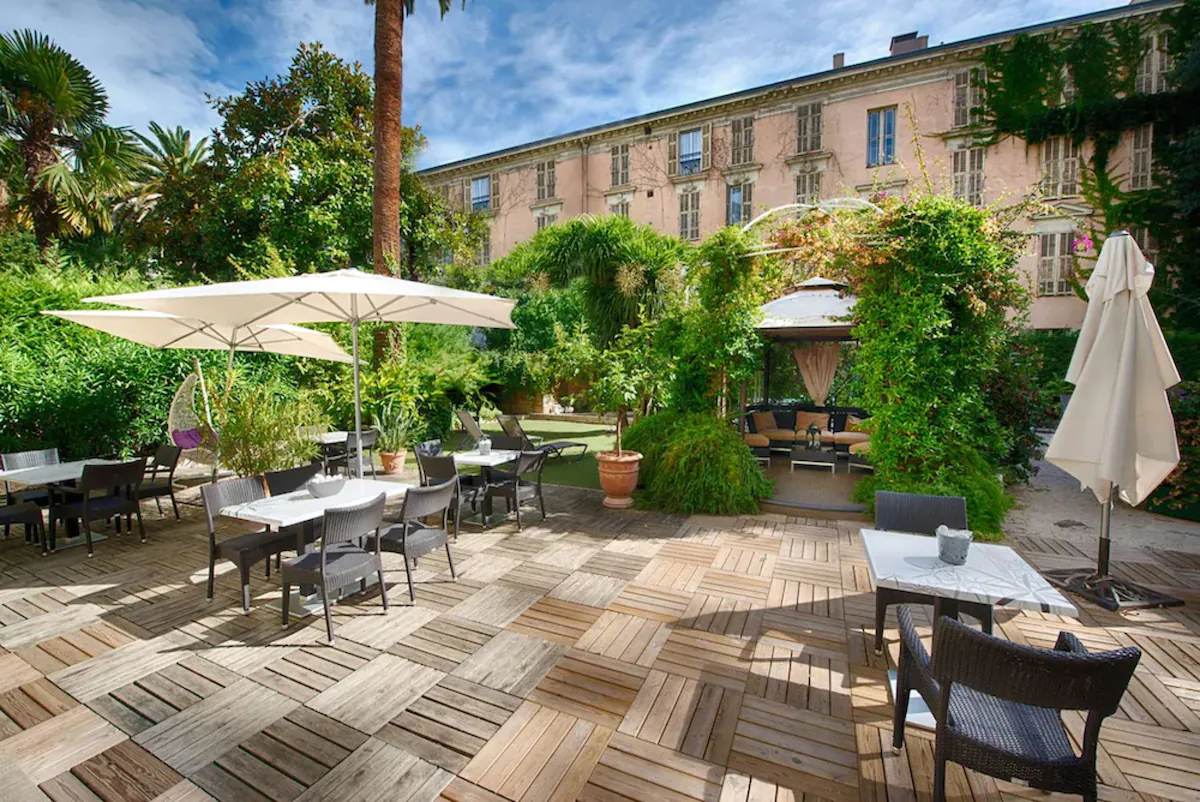 Photo: Booking.com listing
Villa Victoria
Central, proper hotel logistics and easier with luggage than an unknown Old Nice walk-up.
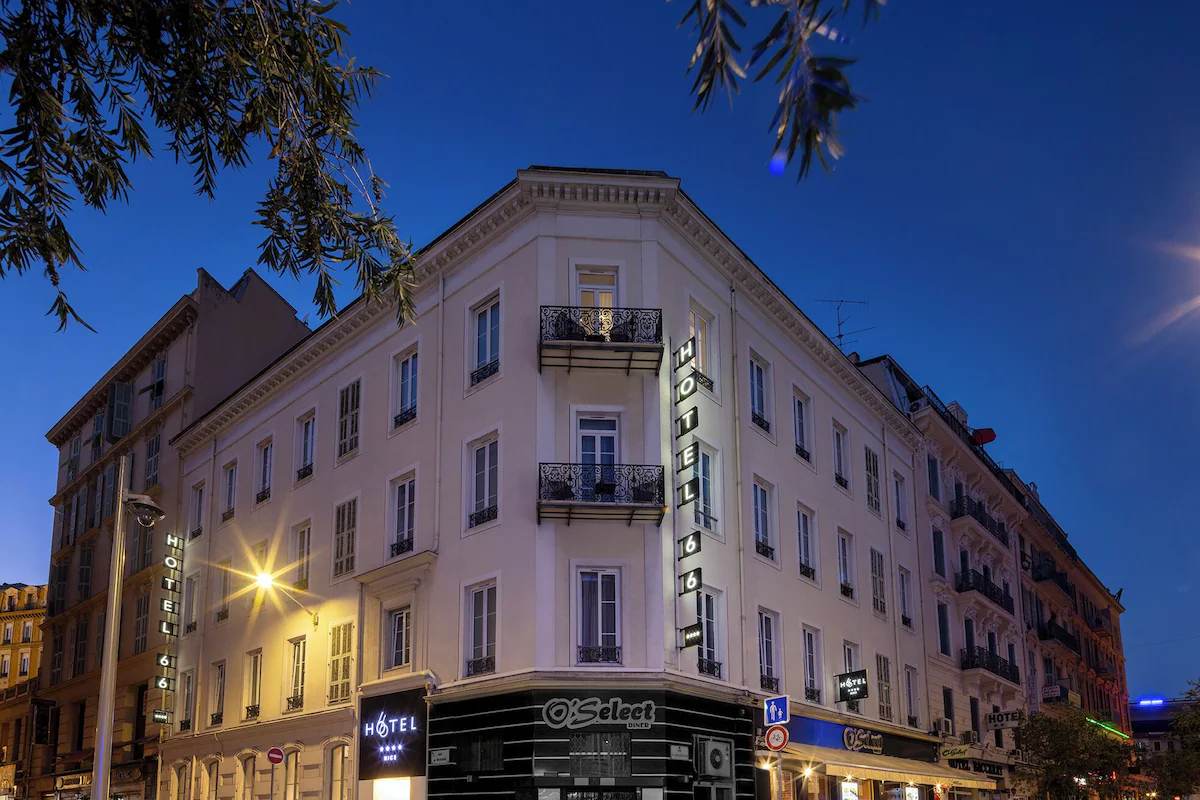 Photo: Booking.com listing
Hotel 66 Nice
Useful when train access and a straightforward arrival matter more than sea-view theatre.
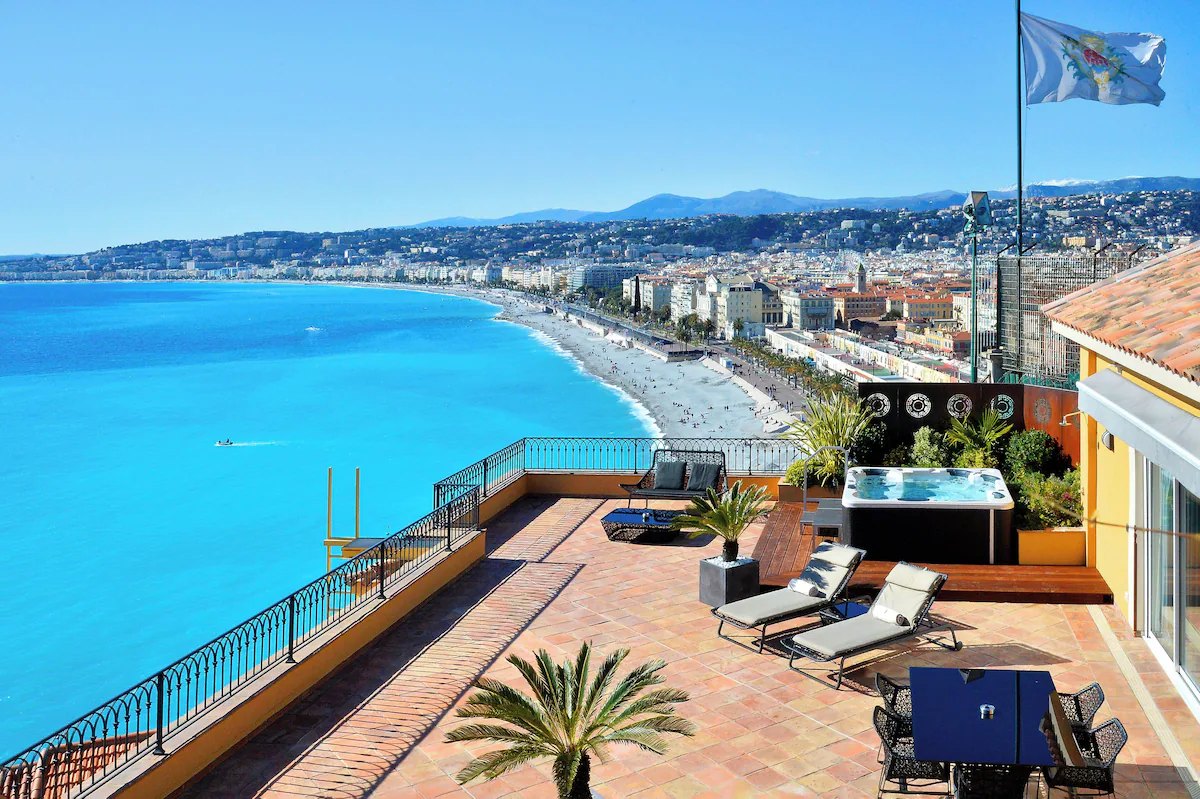 Photo: Booking.com listing
Hôtel La Pérouse
Higher budget, but a strong location if you want Old Nice atmosphere without an anonymous apartment.
This is not a pink version of the Riviera
Travelling alone changes the decision-making. The useful questions are practical: can you get home after dinner without a 25-minute walk on an empty road? Is the hotel close enough to the station for day trips without forcing you to sleep beside it? Will you feel comfortable taking a table for one? What happens if the last train is cancelled?
Nice itself publishes tourist-safety advice focused on ordinary urban precautions such as keeping bags closed and watching belongings in crowded streets and transport. Read the City of Nice guidance → That is a better starting point than declaring whole neighbourhoods “safe” or “unsafe”.
Choose the base by the evening, not just the daytime
Nice
The easiest all-round solo base.
Choose it if you want a no-car trip, several day trips, museums, proper evening options and the freedom to change your mind. The centre is dense enough that dinner, tram and hotel can all sit inside the same walkable triangle.
Antibes
The quieter base that still has a real centre.
Old Antibes works well when you want smaller scale, a beach and dinner without turning every outing into transport. The station keeps Nice and Cannes within reach.
Villefranche-sur-Mer
Beautiful, but choose it for slowness.
The bay is extraordinary and Nice is only minutes away by TER, but the town is steeper and quieter at night. Stay here because you want the atmosphere.
Cannes
Easy and polished when the western Riviera is your trip.
The station, Croisette and centre are compact. It becomes the smart choice if Antibes, Lérins and the western coast matter more than Monaco and Menton.
Menton
Calm, beautiful, slightly less flexible.
A strong choice for gardens, sea and a slower rhythm. It is less useful if you intend to criss-cross the whole Riviera every day.
Solo travel is usually about autonomy. In a 2024 peer-reviewed study of 250 solo travellers, independence and flexibility were the most-cited pre-pandemic motivation (54%), while safety was one of the leading constraints (38.8%). A separate peer-reviewed study of middle-aged and senior women travelling solo found that destination choice was shaped by perceived risk, with safety and health prioritised, alongside comfort, amenities and accessibility.
Research context, not a claim about every traveller: Nirkow & Abbasian, 2024 · Maiurro & Brandão, 2025.
If comfort matters more than proving a point
For many experienced solo travellers, especially later in life, the useful filter is not “can I do it?” but “how much friction do I want?” Check whether the hotel has a lift, how steep the final approach is, how far it really is from the station with luggage, and whether a late dinner creates a long walk home. Build one lighter day into an ambitious itinerary. Comfort is not the opposite of independence; it often protects it.
WHERE TO STAY IN NICE
For a first solo stay, make Carré d’Or the easy answer.
Mametas pick: Carré d’Or, or the southern edge of the Musiciens. Think roughly between boulevard Gambetta and avenue Jean Médecin, and preferably south of boulevard Victor-Hugo if you want the simplest late-evening walk home. You are close to the Promenade, restaurants, tram line 2 and the centre without depending on the station area.
Also good: the Musiciens around boulevard Victor-Hugo gives you a quieter residential feel while keeping the centre walkable. Jean Médecin itself is convenient for tram line 1 and shopping, but for a solo leisure trip we would rather sleep a few streets west or south than choose a hotel simply because it is beside Nice-Ville station.
Old Nice? Brilliant for atmosphere, less automatic with luggage or a late return: check the exact street and, in an old building, check the lift before booking. Port? Very pleasant, but farther from the airport tram and the western day-trip corridor; choose it because you like the neighbourhood.
The rule: choose the walk home after dinner before you choose the room. These are practical tips, not a safety ranking of neighbourhoods.
Five useful doors
What actually matters after dark, on transport and at the beach.
Open → 02 · STAYWhere should I sleep?Neighbourhoods, plus hotels picked for easy solo logistics.
Open → 03 · MOVECan I do it without a car?Airport, TER, late returns and day trips with the real travel times.
Open → 04 · EVENINGSDinner, wine, jazz, comedy?Places where being on your own feels normal rather than like a compromise.
Open → 05 · 5 DAYSGive me a smart first trip.One base, four rail days and enough slack to enjoy them.
Itinerary →Solo does not have to mean social
Some women travel alone because they want to meet people. Others have absolutely no interest in a hostel common room. Both are valid. This guide therefore separates easy-alone activities (museums, coastal walks, cinema, opera, wine bars) from the properly social ones. When you do want company, there are local women-only event communities such as Les Copines de Nice; check the current event and audience before booking.
One boring backup that earns its place
Keep the hotel address, a copy of your ID, bank emergency numbers and one trusted contact somewhere other than the phone itself. Avoid sensitive transactions on public Wi-Fi where possible. And save the French emergency numbers before you need them. Open the Riviera Safety & Emergencies page →
Solo Female FAQ
Is Nice safe for a solo woman?
No city is risk-free, but central Nice is busy, well connected and easy to navigate. The useful precautions are ordinary city ones: watch belongings in crowded transport, know your late-night route and avoid making station-area wandering the plan.
Where should I stay without a car?
Central Nice near tram and rail is the easiest first choice. Prioritise lift access, a straightforward station/airport route and a neighbourhood you are comfortable walking back to after dinner.
Is it awkward to eat alone?
Solo travellers we spoke to reported welcoming service, including on busy summer evenings. Counter seating, terraces and early dinners can make the first evening especially easy.
DINNER OUT OF TOWN?
Check the last return before you order dessert.
Regional trains are excellent for daytime Riviera trips, but evening frequency thins out and the last useful return depends on the destination, day and season. For Monaco, Menton, Antibes or Cannes, open SNCF Connect on the day and check the final two departures back to Nice before dinner. If the last train would make the evening stressful, eat in Nice or budget for a taxi/VTC home.
Nice itself is easier late: the tram runs substantially later than most day-trip trains, but published times still vary with the day and with engineering works. Treat the app/operator timetable as the source of truth.