Saint-Paul-de-Vence: the inland detour that earns its place
Come for stone, art and a change of altitude. Do not come because somebody told you every Riviera itinerary needs one medieval village before lunch.
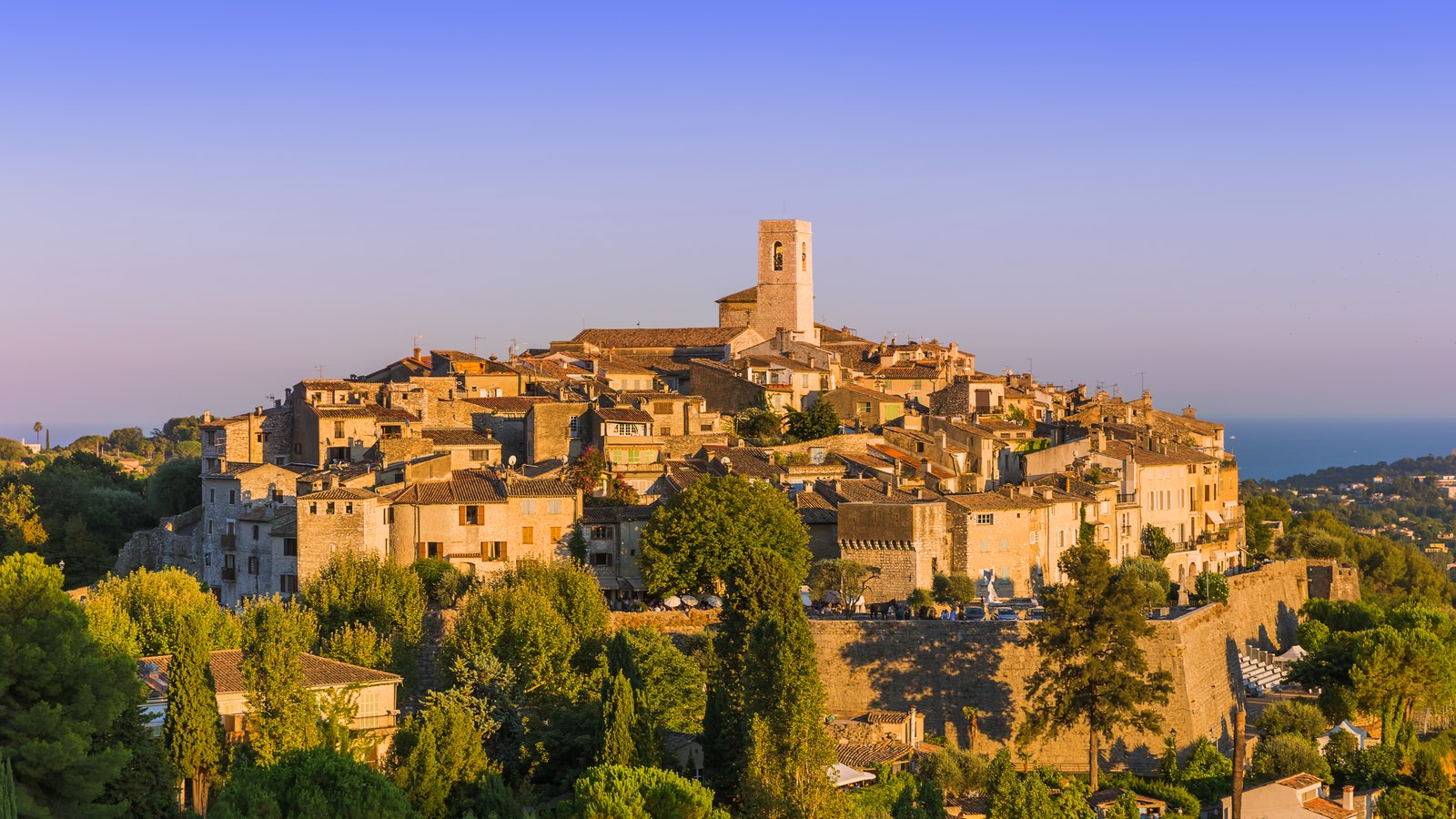
Is Saint-Paul-de-Vence worth it from Nice?
Yes, particularly on a five- or seven-day trip when you want one day that does not look like another station on the coast. Saint-Paul is not about collecting monuments. It is about the combination of intact ramparts, pedestrian lanes, galleries, twentieth-century art history and one of the Riviera’s major art foundations.
With three days, stay on the coast unless modern art is a priority. With five days, Saint-Paul is a strong alternative to Èze or another seaside excursion. With seven, it becomes one of the easiest ways to make the trip feel broader without changing hotels.
How long do you actually need?
The tourist office gives around two hours as a typical village visit. Fondation Maeght gives you another substantial block: the official visitor information lists an average visit of about 90 minutes. Add the walk between the village and the foundation, a coffee or lunch, and suddenly “quick medieval village” has become most of a day. This is not a problem. It is the reason to come.
The old country path from the village to Fondation Maeght takes roughly 30 minutes according to the tourist office. It passes chapels and gives views back towards the village, which is a considerably nicer transition than treating the foundation as a parking-lot annex.
From Nice without a car
The simplest route: a TER from Nice-Ville to Cagnes-sur-Mer, then bus 655, which leaves from the station and climbs to Saint-Paul in about fifteen minutes. If you would rather stay on buses, the tourist office also gives tram line 2 to Parc Phoenix, then bus 9 or 620 to Cagnes-sur-Mer, then the 655: about 1 hour 10 minutes in total. Both work. They simply ask for more patience than a direct Nice-Antibes train.
The village centre is fully pedestrian, which is exactly how it should be. Once there, the useful rule is simple: stop thinking in transport legs and start walking.
What not to miss
The ramparts and Porte de Vence. They are not decorative scenery pasted around restaurants. The fortified village structure is part of the point, and the views explain why this place was built where it was.
Fondation Maeght. Miró, Giacometti, Chagall, Braque, Calder and others make this the anchor that separates Saint-Paul from the category “pretty village we photographed for forty minutes”.
The cemetery. Marc Chagall lived in Saint-Paul for almost twenty years and is buried here. It is a quieter way to reconnect the village with the artists who made it part of the Riviera’s cultural story.
Place du Jeu de Boules and the entrance to the village. Sit down for ten minutes. The Colombe d’Or, the pétanque ground and the history of artists and actors around this entrance tell you more than another souvenir shop.
At La Colombe d’Or, works left by Matisse, Miró, Picasso and Léger in thanks for bed and board still hang on the walls. The simplest way to see them is a table on the terrace: book well ahead.
How we would structure the day
Half day: village, ramparts, cemetery, one proper pause. Full day: Fondation Maeght + walk to or from the village + lunch + village. If you are adding the foundation, stop trying to bolt Èze onto the afternoon. The coast will survive without your complete attendance record.
Saint-Paul-de-Vence or Èze?
Choose Saint-Paul if art, galleries and a deeper inland day appeal to you. Choose Èze if the Mediterranean panorama and the drama of a cliffside village are the priority. Saint-Paul is richer in cultural content; Èze wins the immediate visual argument. On a three-day trip, pick one. On five or seven days, both can make sense if villages are really your thing.
Should you stay overnight?
Usually not on a first Riviera trip if your goal is to explore the coast efficiently. But one night makes sense if you want Saint-Paul after the day visitors thin out, if dinner here is part of the plan, or if the hotel itself is the reason. This is an atmosphere decision. If you stay, the Mametas selection has eight places, from the village itself to quieter country houses.
When we would skip it
You have only three days and still have not given Nice a proper day.
Modern art does not interest you and Èze already satisfies the hilltop-village urge.
You are trying to insert Saint-Paul between Antibes and dinner in Monaco. Geography has declined the invitation.